
 | marketing@wsdks.com |  | +8617712621386 |  | No. 8 Jinwei Road, Changshu City, Jiangsu Province, P.R.China |


Zero Liquid Discharge Technologies Explained
Zero liquid discharge technology is a portfolio of treatment functions that must operate as one system. Pretreatment protects concentration, membranes may reduce thermal load, evaporation removes additional water, crystallization creates separable solids, and every recycle and residual must remain inside a verified mass balance.
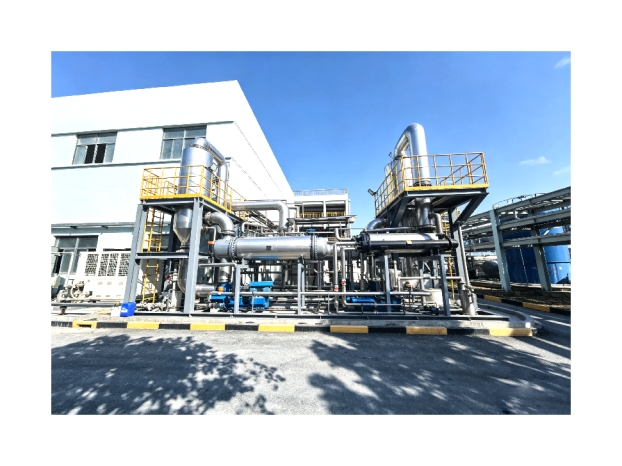
Choosing zero liquid discharge technology starts with the wastewater, not with a preferred equipment label. The feed chemistry, flow profile, recovery objective, energy sources, solids route, and operating capability determine which technology families can work together. VIFLUTER's zero liquid discharge solution categories provide application context, but a project-specific train still requires characterization and engineering.
What counts as zero liquid discharge technology?
ZLD is a system objective rather than a single device. Peer-reviewed reviews describe both thermal and membrane-based process families and emphasize their tradeoffs in energy, cost, water recovery, and solid-residual generation. The technology scope can include source segregation, pretreatment, membrane concentration, evaporation, crystallization, dewatering, polishing, and control systems. A technology belongs in the train only when it performs a defined duty and produces an outlet that the next stage can accept.
Pretreatment technologies establish stable feed conditions
Pretreatment controls contaminants that would otherwise damage or destabilize concentration equipment. Screening and filtration address suspended material. Oil and emulsion separation may reduce organic fouling. Chemical precipitation or softening may control selected metals and scale-forming ions. Adsorption, oxidation, or biological treatment may be relevant for certain organics, but no method should be added without a measurable purpose and a residual-management plan.
The correct pretreatment sequence depends on speciation, pH, temperature, complexing agents, particle size, organic character, and downstream sensitivity. It also creates sludge or spent media. Those residuals must be included in the mass balance instead of being treated as an external detail.
Membrane concentration can reduce the thermal duty
Pressure-driven or electrically driven membrane processes can recover water and concentrate dissolved material before evaporation. Their practical limits depend on osmotic pressure, scaling, organic fouling, temperature, membrane selectivity, pretreatment, and the target water quality. Increasing recovery also raises the concentration of the reject, so the useful question is whether the reject remains compatible with the next stage.
Reverse osmosis, nanofiltration, electrodialysis, and related configurations perform different separation tasks. They should not be grouped as interchangeable products. The design team should compare what each process passes, rejects, concentrates, consumes, and sends downstream.
Thermal evaporation handles the remaining concentrated flow
Evaporation transfers water from liquid to vapor and leaves most nonvolatile constituents in a smaller concentrate. Steam, mechanical vapor recompression, heat-pump cycles, waste heat, or other heat sources may be considered, but the equipment label alone does not determine performance. Boiling-point elevation, viscosity, scaling, corrosion, foaming, volatile compounds, heat-exchanger condition, and condenser duty can control the design.
Vacuum can lower the water boiling temperature, while heat recovery can change the energy balance. Neither feature makes every wastewater suitable. The feed envelope, cleaning strategy, metallurgy, operating range, and residual outlet must be evaluated together.
Crystallization and dewatering define the solids route
Crystallization is used when the treatment objective includes forming separable solids from a concentrated liquid. Crystal formation depends on supersaturation, temperature, ionic mixture, impurities, residence time, agitation, and recycle. Mixed industrial brines can behave differently from pure model salts. Centrifuges, filters, or dryers may reduce moisture, but the final composition and destination of the solids remain project-specific.
VIFLUTER's public industrial wastewater ZLD process overview presents one staged arrangement linking pretreatment, membrane concentration, evaporation/crystallization, and residual drying. It is a client-facing process example, not a universal flow sheet or a performance guarantee.
Emerging electrodialytic crystallization is a research-stage option
A 2023 Nature Water paper presented electrodialytic crystallization as an electric-field-driven, non-evaporative proof of concept for crystallizing a model sodium sulfate brine. Ions were moved through ion-exchange membranes into a recirculating crystallizer. The authors also described how crystallizability depends on salt species, membrane properties, and operating conditions.
This result is useful because it shows that future ZLD systems may combine different concentration and crystallization mechanisms. It should not be generalized into a commercial-readiness claim, applied to every mixed brine, or presented as a technology supplied by VIFLUTER without separate evidence.
Compare ZLD technologies by duty, not by slogan
Technology function | Key feed questions | Required downstream handoff |
Pretreatment | Which solids, oils, metals, hardness, or organics threaten the next stage? | Stable feed plus a managed sludge or spent-media route |
Membrane concentration | What recovery is practical before osmotic pressure, scaling, or fouling becomes limiting? | Permeate with a defined use and reject compatible with thermal treatment |
Evaporation | How will boiling-point elevation, viscosity, foam, corrosion, and volatiles change? | Condensate with verified quality and a controlled concentrate |
Crystallization | Which salts crystallize, and how do impurities affect nucleation and separation? | Separable solids plus a defined mother-liquor recycle or purge |
Dewatering/drying | What moisture and handling condition is required? | A characterized residual with an approved destination |
Integration risks are often more important than unit efficiency
A unit can perform well in isolation and still create a poor system handoff. Pretreatment reagents can change membrane or crystallizer behavior. Membrane antiscalants can affect downstream precipitation. Volatile compounds can move into condensate. A recycle can accumulate contaminants that were absent from the original design basis. Integration review should therefore track additives, recycle composition, purges, cleaning waste, and off-spec operation.
Bench or pilot testing is valuable when scaling, foam, viscosity, crystal behavior, membrane rejection, or condensate quality cannot be predicted confidently. The test should represent the expected concentration range and answer a defined design decision rather than simply demonstrate that water can be removed.
Build the technology shortlist from project data
·Define the ZLD boundary, water balance, and required recovered-water quality.
·Characterize each feed across normal, peak, batch, and upset conditions.
·Map every unit's duty, inlet limits, outlet composition, recycle, purge, and residual.
·Compare utilities, cleaning, materials, controls, redundancy, and operator workload.
·Use testing where mixed chemistry or high concentration makes behavior uncertain.
Select a system, not an isolated technology
The best zero liquid discharge technology is the combination that meets the defined water and residual objectives under the actual feed and site constraints. To discuss a defensible technology shortlist, share the feed and recovery target with VIFLUTER together with the current treatment train, utility limits, and residual destination.
Sources and further reading
·Tong and Elimelech, The Global Rise of Zero Liquid Discharge for Wastewater Management, Environmental Science & Technology, 2016.
·Yaqub and Lee, Zero-liquid discharge technology for resource recovery from wastewater, Science of the Total Environment, 2019.
·Zhang et al., Electrodialytic crystallization to enable zero liquid discharge, Nature Water, 2023.