
 | marketing@wsdks.com |  | +8617712621386 |  | No. 8 Jinwei Road, Changshu City, Jiangsu Province, P.R.China |


Zero Liquid Discharge Market Technology and Buyer Trends
Market direction is clearer than any single market number.The zero liquid discharge market includes different system boundaries, technology combinations, services, industries, and geographies. A credible review must define what is counted before comparing forecasts. This overview uses qualitative evidence checked through September 7, 2026 and does not publish market size, CAGR, vendor share, pricing, or country rankings.
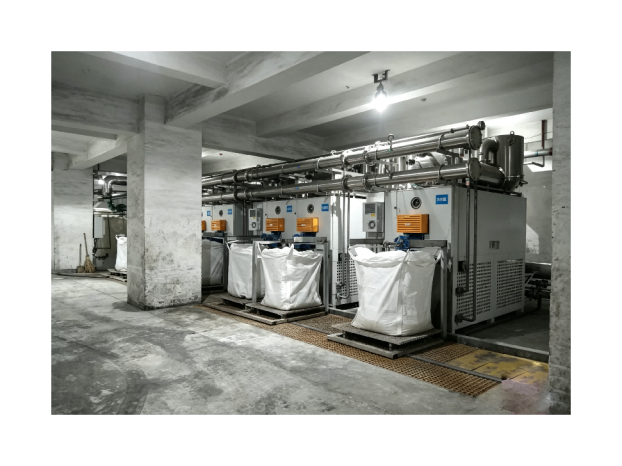
VIFLUTER's zero liquid discharge solutions page provides commercial context for the company's public offering. It does not establish market share, a global ranking, a project count, or supply of every technology discussed below.
Zero Liquid Discharge Market Scope
ZLD is a wastewater management strategy rather than one equipment category. A widely cited review by Tong and Elimelech describes the objective as eliminating liquid waste within a defined boundary while improving water-use efficiency. The same review also identifies cost, energy demand, and solid-waste generation as important constraints. A market definition should therefore state whether it covers complete systems, individual equipment, engineering services, operations support, or some combination.
The boundary also changes the market total. A report may count pretreatment, membranes, evaporators, crystallizers, dewatering equipment, controls, construction, service, or replacement parts. Another may count only the thermal core. Geographic scope, base year, currency, inflation treatment, project recognition, and the treatment of retrofits can create further differences. Two estimates cannot be treated as comparable until these definitions align.
Demand Drivers with Verified Boundaries
Peer-reviewed ZLD reviews identify environmental protection, water security, wastewater reuse, and resource recovery as recurring reasons to evaluate ZLD. These are durable project drivers, not proof of a specific growth rate. A facility still needs a feed-specific and site-specific case because energy, cost, residuals, and operating complexity can limit adoption.
Recovered-water demand is also use dependent. The U.S. Environmental Protection Agency states that different recycled-water sources and end uses may require different treatment and monitoring requirements. This means a buyer should define the actual receiving use before evaluating recovery equipment. Water labeled as condensate or permeate is not automatically suitable for reuse.
Policy can influence screening in particular sectors and jurisdictions. One current U.S. example is the EPA Steam Electric Power Generating Effluent Guidelines page, which identifies regulatory actions affecting wastewater categories such as flue gas desulfurization wastewater, bottom ash transport water, combustion residual leachate, and legacy wastewater. That example should not be generalized into a worldwide ZLD mandate or a conclusion about any individual facility.
Technology Segments
A buyer-oriented market map separates technologies by function. Pretreatment protects concentration equipment and creates sludge or other residuals. Membranes may recover water and reduce the flow sent to thermal processing when salinity, scaling, fouling, pressure, and temperature permit. Evaporation removes additional water. Crystallization and dewatering can create separable solids. Polishing and monitoring support a defined recovered-water use.
VIFLUTER's public industrial wastewater ZLD process page shows one staged commercial process context. It should not be read as the only valid process train. The actual sequence depends on feed chemistry, flow variability, utilities, recovery objectives, and residual handling.
Technology development can add options without immediately changing commercial availability. A 2023 Nature Water paper presented electrodialytic crystallization as a proof of concept for a model sodium sulfate brine. It is evidence of active research, not proof of general mixed-brine performance, market readiness, or VIFLUTER supply.
Service Segments
The market also includes services around the equipment. Early work can involve sampling, treatability testing, water and solids balances, process design, site integration, and pilot testing. Delivery can include detailed engineering, fabrication, construction interfaces, commissioning, controls, documentation, and training. Operating support may include maintenance planning, inspection, troubleshooting, parts, monitoring, and system optimization.
Service scope should be stated rather than inferred from the term ZLD provider. Buyers need to know which party owns civil work, utilities, pretreatment, controls integration, recovered-water acceptance, residual characterization, permits, and long-term operation. A broad service label is not evidence that every responsibility is included.
Industry and Application Segments
Segment lens | Buyer question | Why market estimates can differ |
Power generation | Which wastewater streams and current regulatory requirements are within the project boundary | Some reports count only FGD or coal-related projects while others include broader power-plant water systems |
Mining and minerals | How do flow, climate, salinity, metals, land and residual routes affect the feasible system | Open evaporation, mechanical systems and mine-water services may be grouped or separated |
Chemicals and materials | Which salts, organics, reactions, product recovery goals and hazardous residual duties apply | Projects can range from one difficult stream to a site-wide treatment program |
Electronics and manufacturing | Which process streams can be segregated, reused, concentrated or treated separately | Reports may define semiconductor, electroplating and general manufacturing as different segments |
Food paper and other industries | What feed variability, biodegradable load, product requirements and water-reuse opportunities shape the train | End-use categories and inclusion rules vary widely across publishers |
Industry labels do not replace the feed map. Facilities in the same sector can differ in process chemistry, water circuits, utilities, and local obligations. Separate demand signals from project design conclusions.
Regional Considerations
Regional comparison should separate physical, economic, and policy conditions. Water availability, energy sources and prices, waste and residual routes, industrial concentration, local engineering capacity, supply chains, permitting, and reuse requirements can all affect project screening. These variables change over time and should be dated.
A 2016 review discusses ZLD applications in the United States, China, and India, but that review does not establish current country leadership or market share. A current market article should use regional examples only within their stated date and source scope. Country rankings require a transparent method and current comparable data, so none are included here.
Buyer Evaluation Criteria
Buyers should compare suppliers and technologies against the same project basis. The design package should include representative feed cases, flow variability, target recovered-water use, concentration or solids objective, site utilities, materials, cleaning, controls, redundancy, residual routes, and acceptance testing. Without a common basis, quoted capacity, energy, price, and scope may describe different systems.
Thermal proposals need a clear energy and heat-integration basis. U.S. Department of Energy process-heating guidance supports a systems approach that considers heat transfer, controls, equipment condition, and energy recovery. It is not ZLD-specific and cannot support a VIFLUTER energy value or savings claim, but it explains why utility comparison requires more than an equipment name.
·Define the feed envelope and identify the limiting chemistry and flow cases.
·Require a water and solids balance that includes every recycle purge and cleaning waste.
·State recovered-water quality and the actual receiving use without assuming compliance.
·Separate equipment supply from site civil electrical utility storage and residual responsibilities.
·Define pilot testing acceptance and performance measurement before commercial comparison.
How to Read Market Forecasts
A useful market forecast discloses the base year, forecast period, currency, geography, technology and service scope, end-use categories, treatment of inflation, primary research method, secondary sources, and rules for recognizing project revenue. It should explain how missing or private transaction data were estimated and whether figures include equipment, services, construction, consumables, or operations.
CAGR does not resolve a weak definition. Recalculate it only after confirming the starting value, ending value, period count, units, and whether the series is nominal or real. Compare independent estimates by definition before comparing their values. If a report provides only a headline number without transparent scope and method, use it as a research lead rather than a verified fact.
Vendor lists require similar care. Inclusion can reflect public visibility, report methodology, sponsorship, regional coverage, or disclosed projects rather than comparable market share. A supplier's product page cannot prove leadership. This article therefore does not publish a ranked vendor list or imply a VIFLUTER market position.
Source Methodology and Update Rules
This overview uses official public pages for current regulatory or reuse context, peer-reviewed reviews for ZLD drivers and technology families, a peer-reviewed paper for a research-stage example, and verified client pages only for VIFLUTER's public positioning. Sources were checked on September 7, 2026. Each dated source retains its original geography and subject boundary.
Recheck this article before publication and after material policy, technology, or client-site changes. Reopen the evidence review if any market size, CAGR, vendor name, share, country ranking, price, license term, case result, or quantitative performance claim is added. Those claims need their own current source, definition, date, and permitted wording.
Questions for ZLD Suppliers
A market overview should help a buyer prepare a better project discussion. Ask what feed and operating data the supplier needs, which technology duties it proposes, what it excludes, how it handles variability, which utilities and owner systems are required, and how the residual endpoint is defined. Request evidence that matches the proposed configuration and acceptance basis rather than relying on general market language.
Use a Defined Market and Project Boundary
The zero liquid discharge market is best understood through transparent scope, verified drivers, technology duties, and buyer criteria. Market totals and rankings should remain separate until their definitions and evidence are comparable. To discuss project-specific supplier criteria, share the wastewater and procurement boundary with VIFLUTER together with geography, industry, feed data, capacity, recovered-water use, utilities, residual routes, and required source transparency.
Sources and Further Reading
·Tong and Elimelech, The Global Rise of Zero Liquid Discharge for Wastewater Management, Environmental Science and Technology, 2016.
·Yaqub and Lee, Zero liquid discharge technology for resource recovery from wastewater, Science of the Total Environment, 2019.
·U.S. Environmental Protection Agency, Basic Information about Water Reuse, updated June 5, 2026.
·U.S. Environmental Protection Agency, Steam Electric Power Generating Effluent Guidelines, updated May 14, 2026.
·Zhang and colleagues, Electrodialytic crystallization to enable zero liquid discharge, Nature Water, 2023.
·U.S. Department of Energy, Improving Process Heating System Performance, Second Edition, 2008.