
 | marketing@wsdks.com |  | +8617712621386 |  | No. 8 Jinwei Road, Changshu City, Jiangsu Province, P.R.China |


Wastewater Evaporator Selector and Cost Guide
Selection starts with the feed and the operating boundary.A wastewater evaporator selector should translate representative wastewater data, site utilities, cleaning constraints, and residual requirements into a shortlist. Purchase price alone cannot show whether a system will remain operable as concentration, scaling risk, and material demands increase.
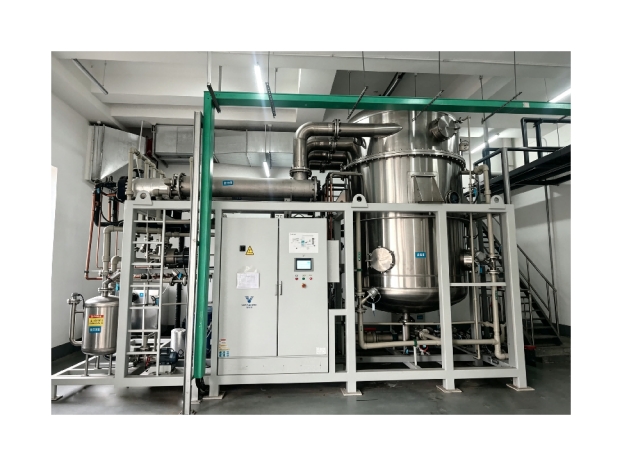
Begin by reviewing the functions represented in the industrial wastewater evaporator range. Product categories provide a starting point for discussion, but they do not replace a feed specific design basis or prove suitability for a particular wastewater.
How to Use a Wastewater Evaporator Selector
Treat the selector as a sequence of engineering decisions. First define what enters the evaporator and how it varies. Then state the required outlet, operating schedule, utility limits, and residual route. Only after those conditions are clear should the team compare heat sources, vacuum arrangements, materials, controls, and maintenance access. This order keeps a familiar equipment label from becoming an unsupported design decision.
Start with Wastewater Characterization
A representative analysis should cover dissolved and suspended solids, major ions, organics, oils, volatile compounds, pH, temperature, and constituents that affect corrosion or deposit formation. The team should also identify additives from upstream production and treatment. A single grab sample may miss batch changes, cleaning discharges, seasonal shifts, or upset conditions that determine the most difficult operating case.