
 | marketing@wsdks.com |  | +8617712621386 |  | No. 8 Jinwei Road, Changshu City, Jiangsu Province, P.R.China |


Vacuum Evaporator Selection Guide: 7 Factors to Evaluate Before Buying
Most RFQs we receive at VIFLUTER ask for "a 10-ton-per-dayevaporator." But capacity is factor number four on the list. The firstthree — water chemistry, scaling risk, and boiling point elevation — determinewhether the machine will run for months or fail within weeks. Here's ourframework, built from commissioning systems on 12 different wastewater types.
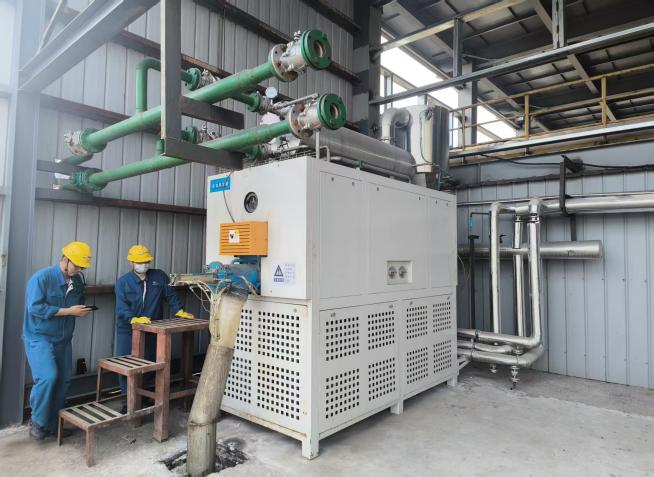
Factor 1: TDS and Salt Chemistry
If your TDS is under 5,000 mg/L, almost any evaporator designworks. If it's above 50,000 mg/L, you need forced circulation — period. Betweenthose numbers, the specific salts matter. Sodium chloride solutions arestraightforward. Sodium sulfate? It has a steep solubility curve that dropssharply below 32°C, crystallizing in cold spots. Mixed Na₂SO₄-NaCl-H₂O systemsform glauberite at certain ratios, a scale so hard it requires mechanicalremoval.
Ask your vendor: "Show me your scale modeling for my exactsalt mix." If they can't answer, walk away.
Factor 2: Scaling and Fouling Potential
Reverse solubility salts — calcium carbonate, calcium sulfate,silica — precipitate more aggressively as temperature rises. This is whyoperating at 40-50°C instead of 100°C matters: the scaling rate can differ by afactor of 5-10. But temperature alone isn't enough. Circulation velocity is thesecond lever. VIFLUTER's forced circulation evaporators run at 2-4 m/stube-side velocity, preventing particles from settling on heat transfersurfaces.
For high-hardness feeds, insist on CIP-ready designs with acid andalkaline wash circuits. A coal-to-ethylene glycol plant running VIFLUTERequipment sees COD drop from 15,000 to 32 mg/L — but only with regularautomated CIP cycles keeping the heat exchanger clean.
Factor 3: Boiling Point Elevation (BPE)
BPE is the silent killer of evaporator economics. Strong sodiumchloride brine at 25% concentration raises the boiling point by roughly 7°C.That means the compressor must work against a higher temperature lift, droppingCOP. A well-designed system accounts for BPE in the compressor sizing, not asan afterthought. VIFLUTER uses oil-free scroll compressors with a wideoperating envelope specifically to handle BPE swings during batchconcentration.
Factor 4: Capacity and Turndown
VIFLUTER's FC series spans 1 to 30 tons per day. But capacityselection isn't just about daily volume — it's about batch versus continuousoperation and turndown ratio. A plant running three 8-hour shifts may need asmaller evaporator (continuous operation, 24-hour runtime) than a single-shiftoperation despite processing the same daily volume.
Key question: what's your minimum flow? Most evaporators loseefficiency below 40-50% of design capacity. If your production variessignificantly, specify your turndown requirement upfront.
Factor 5: Materials of Construction
Stainless steel 316L handles most industrial wastewater. But highchloride levels (above 1,000 mg/L at elevated temperatures) demand duplexstainless steel (2205) or titanium. VIFLUTER offers material upgrades based onwater analysis — don't let a vendor sell you 316L for high-chloride brine justbecause "it's the standard option."
Factor 6: Automation and Operator Skill
A traditional multi-effect evaporator requires a trained operatorwatching gauges and adjusting valves throughout the shift. VIFLUTER'sskid-mounted heat pump evaporators run fully automated with PLC control. Thismatters in regions with high labor costs or where skilled operators are scarce.An oil and gas customer replaced a complex multi-step treatment train with asingle VIFLUTER unit, cutting operator workload significantly while improvingtreatment stability.
Factor 7: Total Lifecycle Cost, Not Capex
A cheaper evaporator with a higher fouling rate costs more over 5years than a well-designed system with a 20% Capex premium. Budget for:electricity (dominant), CIP chemicals, membrane/compressor replacementintervals, and disposal of concentrate. A pesticide intermediate manufacturerrunning VIFLUTER equipment reduced hazardous waste output by 70% and cutdisposal cost by 50% — the energy savings were almost secondary to the wastereduction economics.
Send us a water sample. We'll run a treatability test and give youa selection matrix scored against all seven factors — not a generic brochurerecommendation.