
 | marketing@wsdks.com |  | +8617712621386 |  | No. 8 Jinwei Road, Changshu City, Jiangsu Province, P.R.China |


Heavy Metal Removal in Wastewater Treatment
Metal speciation determines the treatment task.Heavy metals in wastewater treatment processes cannot be managed from a total concentration alone. Dissolved and particulate forms, valence, pH, complexing agents, competing ions, suspended solids, and the required outlet determine which separation steps are appropriate and what residuals they create.
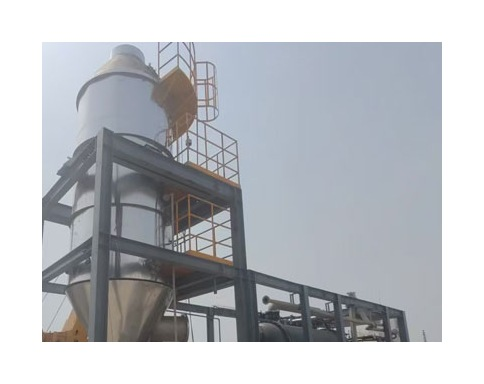
VIFLUTER's public electroplating wastewater treatment page describes a client solution context. This guide compares industry general process functions and does not establish removal performance, a universal train, or compliance for a facility.
Heavy Metals in Wastewater Treatment Processes
A treatment train should be built around the chemical form that must be separated. A metal may be present as a free ion, a complex, a precipitate, a colloid, or material attached to suspended solids. Oxidation state can change solubility and treatment response. Chelants and other complexing agents may keep a metal dissolved at a pH where a simple equilibrium estimate suggests precipitation.
The influent matrix also matters. Salts, organics, oils, surfactants, reducing or oxidizing agents, and other metals can affect reactions and separation. Upstream production changes can alter the wastewater without changing the name of the stream. For this reason, process selection should use representative samples and a documented analytical method.
Characterize Species and Test Treatability
Start with total and dissolved measurements where they are relevant to the decision, plus pH, alkalinity, suspended solids, conductivity, major ions, organic indicators, and known complexing agents. Identify the target metals and valence where it affects treatment. Record minimum, normal, and peak flow and concentration instead of relying on one composite result.
Bench testing can evaluate reagent sequence, pH response, solids formation, settling or filtration, and residual composition. Testing should reproduce the actual matrix and define what success means for the next stage. A result from synthetic water or a different production line should not be transferred without checking the chemical differences.
Use Precipitation for a Defined Separation
Chemical precipitation converts selected dissolved species into solids that can be separated. Hydroxide, sulfide, carbonate, or other precipitation routes may be considered according to the metal, matrix, pH, safety, downstream process, and sludge plan. The process needs mixing, reaction control, solids formation, and a reliable solid liquid separation step.
Precipitation does not guarantee that every metal reaches the required outlet. Complexing agents, competing reactions, very fine particles, redissolution, and multiple metals with different pH behavior can limit a simple approach. Reagent dose and endpoint must come from approved testing and operating procedures, not a universal recipe.
Separate Coagulation and Solid Liquid Duties
Coagulation and flocculation can help aggregate fine precipitates or colloids so clarification, flotation, or filtration can remove them. These steps address particle behavior. They should not be described as direct removal of every dissolved metal. The design should state the particle size, settling or filtration duty, sludge production, and response to changing influent conditions.
Solid liquid separation may use clarifiers, media filters, membrane filtration, filter presses, or other equipment according to the slurry. A clear overflow or filtrate is one control point. The sludge still needs dewatering, characterization, storage, and an approved destination.
Compare Polishing and Recovery Options
Process function | Potential role | Important limitations and residuals |
Ion exchange | Selective polishing or recovery where the resin and feed chemistry are suitable | Competing ions, fouling, regeneration, spent regenerant, resin life, and final polishing target |
Adsorption | Polishing selected dissolved species on a verified media | Capacity, selectivity, pH, competing species, media replacement or regeneration, and spent media |
Membrane separation | Retain ions or particles and create a lower load water stream where rejection and pressure permit | Concentrate management, scaling, fouling, pretreatment, cleaning, and membrane compatibility |
Electrochemical methods | Transform or recover selected metals under controlled chemistry | Energy, electrode condition, conductivity, side reactions, residuals, and feed specific performance |
Evaporation | Concentrate a remaining liquid stream or support a broader ZLD objective | Volatile transfer, scaling, corrosion, condensate verification, concentrate or solids handling, and energy |
A peer reviewed review by Fu and Wang describes chemical precipitation, ion exchange, adsorption, membrane filtration, coagulation and flocculation, flotation, and electrochemical methods among the technologies studied for heavy metal wastewater. The list is a technology map. It does not show that every method fits every matrix or that a single method meets a particular discharge requirement.
Use Membranes and Electrochemical Methods Carefully
Membranes can separate particles or dissolved ions according to the membrane and operating conditions. They usually create a concentrate that contains much of the retained load. Osmotic pressure, scaling, organic fouling, pH, oxidants, temperature, and cleaning compatibility may control feasibility. Permeate quality needs analytical confirmation for its intended destination.
Electrochemical methods can support precipitation, coagulation, oxidation or reduction, deposition, and recovery depending on the design. The required conductivity, electrode materials, current distribution, side reactions, energy, solids, and maintenance should be evaluated with the actual feed. An electrochemical label alone does not establish selectivity or operating cost.
Position Evaporation as a Downstream Step
Evaporation may concentrate a residual liquid after upstream treatment or form part of a ZLD train. It should not be presented as a universal substitute for metal specific chemistry. The industrial wastewater applications page provides broader context, while the final process sequence must follow the wastewater matrix and outlet objectives.
Nonvolatile metals generally remain in the concentrate, but volatile species or entrainment can affect condensate. Scale, corrosion, suspended solids, viscosity, and foam can also change as water is removed. The design should include vapor separation, condensate monitoring, concentrate handling, cleaning waste, and materials selection.
Manage Sludge Concentrate and Spent Media
Residual management is part of the treatment decision. Precipitation creates sludge. Ion exchange can create spent regenerant. Adsorption creates spent media. Membranes create concentrate. Electrochemical processes may create solids, spent electrodes, or concentrated solutions. Evaporation creates concentrate or a slurry. Record the composition, moisture, volume or mass, storage, dewatering, and destination for each outlet.
Do not infer the regulatory classification or disposal route from the process name. Characterization, jurisdiction, permits, and facility responsibilities determine the applicable requirements. The treatment system should provide sampling points and records that support those decisions without claiming compliance in advance.
Verify Performance with the Correct Analytical Basis
·Name the target metal species and the analytical method used at each control point.
·Separate dissolved, particulate, and total measurements where the distinction affects the process.
·Use matrix matched testing for pH, reagents, media, membranes, or electrochemical steps.
·Track every sludge, concentrate, regenerant, spent media, and cleaning waste outlet.
·Compare results with the exact facility requirement through the responsible regulatory review.
Build the Treatment Train from Speciation
Heavy metals in wastewater treatment processes require a sequence that matches speciation, matrix conditions, outlet requirements, and residual management. To discuss a bounded treatment approach, submit the speciation and process data to VIFLUTER together with flow variability, pH, complexing agents, current treatment, analytical methods, and the intended residual routes.
Sources and Further Reading
·Fu and Wang, Removal of heavy metal ions from wastewaters, Journal of Environmental Management, 2011.
·U.S. Environmental Protection Agency, Electroplating Effluent Guidelines, updated March 17, 2026.
·Yaqub and Lee, Zero liquid discharge technology for resource recovery from wastewater, Science of the Total Environment, 2019.